

Source: An In-Depth Look at the Transformer Based Models
Introduction
Transformer-based models have revolutionized the field of natural language processing by providing a highly effective framework for understanding and generating text. Introduced in the groundbreaking paper “Attention is All You Need” by Vaswani et al. in 2017, Transformers employ the self-attention mechanism to capture relationships between words in a sequence, regardless of their distance. Eventually, various architectures of transformer models have emerged, each tailored to specific tasks and requirements. Among them, three main categories stand out: encoder-only, decoder-only, and encoder-decoder models. This article gives an overview for these architectures, highlighting their design principles, strengths, and common use cases.
Encoder-only Models
Encoder-only models focus exclusively on encoding input data into dense vector representations. These models leverage the bidirectional self-attention mechanism to capture the context of each token based on its surroundings, which leads them to excel in tasks requiring deep comprehension of context.
Key Features:
- Bidirectional Contextualization: Each token is informed by both preceding and following tokens simultaneously to enable nuanced understanding. This approach improves token representation that better captures context-rich meanings critical for interpreting text accurately.
- Pre-training Tasks: Tasks are often formulated as masked language modeling, where some tokens are masked, and the model learns to predict them based on context. This pre-training task helps models learn contextual patterns, enabling advanced capabilities for various natural language processing tasks.
Example Models:
- BERT (Devlin et al., 2018): It was trained with bidirectional contextualization via masked language modeling and next-sentence prediction. BERT revolutionized NLP tasks particularly in comprehension-focused applications like question answering. “BERTology” was a term that researchers used to recognize how BERT dominated benchmarks when it was first published.
- RoBERTa (Liu et al., 2019): It enhanced BERT by removing next-sentence prediction, increasing training data, batch sizes, and iterations. These optimizations improved performance, making it a stronger, more efficient model for diverse NLP tasks.
Applicable Tasks:
- Sentiment analysis
- Text classification
- Named entity recognition
Decoder-only Models
Decoder-only models are designed primarily for generating text. Unlike encoder-only models, they use unidirectional self-attention, focusing on generating the next token in a sequence based on the tokens already generated. Thus, this makes them well-suited for autoregressive tasks.
Key Features
- Unidirectional Attention: Decoder-only models use unidirectional attention, where tokens attend only to preceding ones. This causal structure ensures coherence and logical sequence in text generation, vital for tasks like storytelling.
- Pre-training Tasks: Decoder-only models are commonly pre-trained using causal language modeling to predict the next token sequentially, focusing on left-to-right dependencies. This method enhances fluency and contextual accuracy for generative applications like dialogue and content creation.
Example Models
- GPT-4: an OpenAI’s closed-source decoder-only model that excels in generating context-aware text for applications like creative writing, programming assistance, and advanced problem-solving. Leveraging vast training data, GPT-4 is considered nearly the most powerful large language models among all.
- LLaMA 3: a Meta’s open-source advanced decoder-only mode that focuses on efficient text generation and comprehension. It balances performance and scalability, supporting a wide range of NLP tasks with optimized parameterization.
Applications
- Text generation
- Summarization
- Dialogue systems
Encoder-decoder Models
Encoder-decoder models combine the strengths of both encoder and decoder architectures. The encoder processes the input sequence to produce a context-rich representation, which the decoder then uses to generate the output sequence. This architecture is particularly powerful for tasks involving context-aware sequence-to-sequence generation.
Key Features
- Input-Output Mapping: Encoder-decoder models transform input sequences into dense representations via the encoder, enabling the decoder to map them directly into meaningful output sequences, excelling in translation and summarization tasks.
- Cross-Attention: Cross-attention allows the decoder to focus selectively on encoder outputs, ensuring generated sequences accurately align with input context, crucial for tasks requiring precise input-output correspondence, like translation or Q&A.
Example Models:
- T5: treats all NLP tasks as text-to-text problems, offering flexibility across tasks like translation, summarization, and classification by converting inputs and outputs into text sequences.
- BART: integrates bidirectional and autoregressive components and was pre-trained with denoising autoencoder. This hybrid approach makes it effective for sequence-to-sequence tasks such as text generation, summarization, and text restoration.
Applications:
- Machine translation
- Text summarization
- Question answering
Overall Comparison
The table below summarizes the differences among the three stakeholders. In order to make it more specific, we select three one representative models for each to get a clear picture of them.

Source: AIML.com Research
Note that causal language modeling of decoder-only models aligns closely with the core objective of language modeling. Also, decoder-only models have been found more efficient and scalable than encoder-decoder models. As a result, decoder-only models have huge dominance in modern LLM research.
Video Explanation
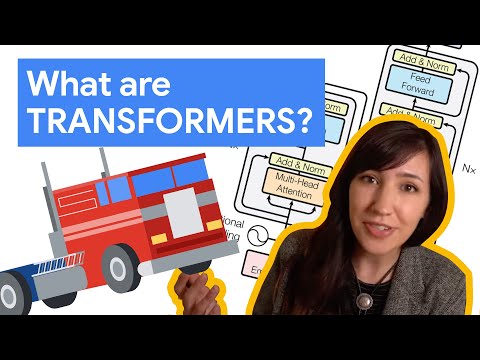
- This Google Cloud Tech video, presented by Dale Markowitz, introduces the Transformer architecture behind models like GPT, BERT, and T5. Furthermore, it covers the limitations of earlier sequence models, explains self-attention, multi-head attention, and positional encoding, and outlines the encoder–decoder framework with examples of real-world applications. (Runtime: ~9 mins)
Conclusion
In conclusion, Transformer architectures come in three main types, each tailored to specific NLP tasks. Encoder-only models are designed for understanding text, making them ideal for tasks like classification. Decoder-only models specialize in text generation, excelling in tasks like code generation. Encoder-decoder models combine these strengths, mapping inputs to outputs, making them perfect for tasks like translation and summarization. These architectures remain essential as language model technology advances.
Related Articles
- Making Transformers Work: Scale, Access, Deployment and Ethics
- What are the primary advantages of transformer models?
- What are the limitations of transformer models?