

Source: AIML.com Research
Image Segmentation is a task of Computer Vision focusing on identifying and grouping pixels together based on their content to understand an image. While standard image classification answers the question “What is in this image?” and object detection answers “Where are the objects?” Segmentation, on the other hand, goes to another big question: “Which exact pixels belong to which object?”

Source: AIML.com Research
At its core, segmentation is a pixel-level classification task. It requires a system to translate grids of pixels into a precise map where every single point in the image is assigned a specific category. This process bridges the gap between rough approximations and precision. Unlike object detection, which deals in rectangles, segmentation deals in organic shapes (curving roads, irregular tumors, or the outline of a person). Naturally, a robust model for segmentation must combine the feature extraction toolkits of Convolutional Neural Networks (CNNs) with mechanisms to reconstruct spatial resolution. In this article, we will discuss the distinctions between the two main types of segmentation, the state-of-the-art models that drive them, and their real-world applications.
Semantic vs. Instance
To understand how machines “see” shapes, we must first distinguish between the two primary approaches to this problem. While they look similar at a glance, they serve very different purposes.
Semantic Segmentation
This method treats every pixel of the same category as identical. For instance, take a look at the image below showing a dog and two sheep running on a grass field. In Semantic Segmentation, the model labels all pixels belonging to the dog with “dog” tag, and 2 sheep with the same “sheep” tag (and color). It does not distinguish between “Sheep A” and “Sheep B.” The goal is to understand the “stuff” in the image: the sky, the field, the animals. It answers the question: “What category does this pixel belong to?”
Instance Segmentation
This is a more complex hybrid of object detection and segmentation. It treats specific objects as distinct entities. In that same image of five cars, Instance Segmentation identifies them as 3 separate objects: “dog,” “sheep1,” “sheep2,” and so on. It effectively ignores background elements like the sky or grass to focus on countable objects. It answers the question: “Which specific object does this pixel belong to?”

Source: Cholakkal et.al
Semantic Segmentation model: The U-Net Architecture
The fundamental challenge in semantic segmentation is a trade-off between “context” and “location.” Deep neural networks usually shrink an image (downsampling) to extract meaningful features, but segmentation requires an output that is the same size as the input. If you shrink the image too much, you lose the precise location of the edges. If you don’t shrink it, you can’t learn what the object is.
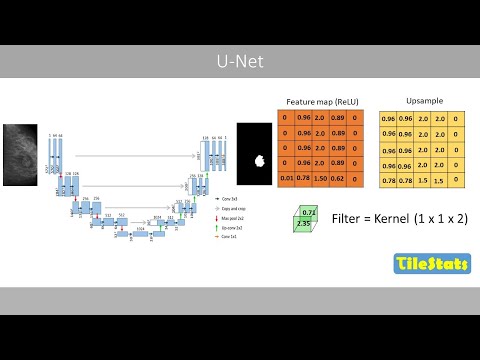
The most iconic solution to this problem is the U-Net. Originally designed for biomedical image segmentation, it has become the industry standard for its simplicity and effectiveness. As the name suggests, the architecture looks like the letter “U.”

Source: Ronneberger et.al
The Encoder
The left side of the “U” acts like a traditional classification network (similar to VGGNet or ResNet). It consists of repeated convolutional layers and max-pooling operations.
This section progressively reduces the size of the image while increasing the number of feature channels.
It captures the context. It sacrifices spatial details (where things are) to understand complex features (what things are). By the bottom of the “U,” the model has a compressed, rich mathematical summary of the image’s content.
The Decoder
The right side of the “U” works in reverse. It uses “up-convolutions” (or transposed convolutions) to gradually resize the feature map back to the original image dimensions.
This section increases the resolution of the image. It recovers the localization. It tries to take that rich summary and paint it back onto a full-sized canvas.
The true genius of U-Net lies in the “Skip Connections”: the bridges connecting the left side of the U to the right side. As the encoder compresses the image, fine details (like the texture of a wall or the edge of a cell) are often lost. U-Net solves this by copying high-resolution feature maps from the Encoder and pasting them directly onto the corresponding layers in the Decoder. This allows the model to see the “big picture” (from the bottom of the U) while retaining the “fine details” (from the skip connections). The result is a highly accurate map that respects boundaries.
Instance Segmentation model: The R-CNN Family
While U-Net excels at labeling classes, distinguishing individual instances requires a different approach. You cannot simply label pixels; you must first find the object, then outline it. The most common solution is the Mask R-CNN, an evolution of the Region-based Convolutional Neural Network (R-CNN) family.
Basic structure
Mask R-CNN follows a “two-stage” detection process that prioritizes accuracy.
Stage 1: Region Proposal
Before the model tries to segment anything, it scans the image to find areas where objects might exist. A component called the Region Proposal Network (RPN) slides over the feature map and outputs “proposals”: rough boxes that might contain a dog, a person, or a car. This acts as a filter, allowing the model to ignore empty background space.
Once the proposals are generated, the model looks at these specific regions (Regions of Interest or RoIs). In previous models like Faster R-CNN, the system had two branches:
- Class Branch: Identifies what the object is (e.g., “Human”).
- Box Branch: Refines the coordinates of the bounding box.
- Mask Branch: outputs a binary mask for each region that determines if it is part of the object.

Source: He et al.
Refined Optimization
RoI Align
A critical improvement in Mask R-CNN is a technique called RoI Align. Previous versions used “RoI Pooling,” which rounded off decimal coordinates to integers (quantization). While this slight misalignment didn’t matter for drawing a box, it was disastrous for pixel-perfect masks. RoI Align uses bilinear interpolation to preserve exact spatial locations. This ensures that the mask fits the object perfectly, rather than being slightly shifted.
The Transformers: A New Paradigm
In recent years, Transformers have begun to replace traditional CNNs in segmentation, just as they have in Natural Language Processing. The limitations of CNNs lie in their “Receptive Field”, they look at small groups of pixels at a time.
Vision Transformers (ViT) and SegFormer
Transformers process information differently. Using Self-Attention mechanisms, they can process the entire image at once. This allows the model to understand global relationships instantly. For example, in a CNN, a pixel of “road” in the bottom left might not “know” about the “sky” in the top right until very deep in the network. A Transformer connects them immediately. Advanced models like Mask2Former unify both semantic and instance tasks into a single framework. They treat segmentation not as a classification problem, but as a “mask classification” problem. By learning a set of queries (similar to linguistic tokens), the model predicts a mask and a class label for every segment simultaneously, achieving state-of-the-art results on benchmark datasets.
Evaluation: How do we grade these models?
Training these models requires different metrics than standard accuracy. If an image is 90% background and 10% object, a model that simply predicts “background” for every pixel would be 90% accurate but useless. To fix this, researchers use the Intersection over Union (IoU), also known as the Jaccard Index.
- Intersection: The area where the model’s prediction overlaps with the Ground Truth. In supervised learning, this Ground Truth consists of pixel-perfect masks that are usually manually annotated by humans.
- Union: The total area covered by both the prediction and the Ground Truth combined.
- The Score: Dividing the Intersection by the Union gives a score between 0 and 1. A score of 1 means the prediction is a perfect match. This metric forces the model to be precise; merely covering the object isn’t enough—it must not cover the background either.
Because IoU functions like grading a test with an answer key, it requires labeled data to calculate. It cannot be used directly on unlabeled datasets. For unlabeled data, researchers typically use strategies like synthetic data or pseudo-labeling, but final validation always requires a set of human verified images.
Real-World Applications
Segmentation transforms raw pixels into actionable schematics. Its applications span across industries that require high-level visual understanding.
Autonomous Driving
This is perhaps the most critical application. A self-driving car relies on Semantic Segmentation to identify the drivable surface. It must distinguish the gray pixels of the road from the gray pixels of the sidewalk with 100% reliability. Simultaneously, it uses Instance Segmentation to track individual pedestrians and vehicles. Knowing there is a “cluster of cars” isn’t enough; the car needs to know that “Car A” is merging left while “Car B” is braking, requiring it to track them as separate instances.

Source: Cityscapes Dataset Examples
Medical Imaging and Healthcare
In the medical field, U-Net and its derivatives are saving lives. Radiologists use these models to automatically contour organs for radiation therapy planning or to detect tumors in MRI and CT scans. By calculating the exact volume of a nodule pixel-by-pixel, these models assist doctors in tracking disease progression more accurately than manual measurements ever could.
Satellite Imagery and Agriculture
Segmentation is used to map the earth from above. Governments use it to track urban sprawl, identifying specific buildings and roads in satellite photos. In precision agriculture, smart farming robots use segmentation to distinguish crops from weeds in real-time. This allows for “spot spraying” of herbicides, targeting only the unwanted plants and significantly reducing chemical usage.
Conclusion
Image segmentation represents a critical evolution in computer vision, moving beyond rough bounding boxes to pixel-perfect precision. By assigning every pixel a specific category, it enables machines to understand the true shape and extent of objects within an environment. We have explored the two primary approaches: Semantic Segmentation, which groups pixels by class using architectures like U-Net, and Instance Segmentation, which distinguishes individual objects using the R-CNN family. As the field integrates Transformer-based models, segmentation is becoming increasingly accurate and efficient, serving as the foundational technology for high-stakes applications ranging from autonomous driving to medical diagnostics.
Video Explanation
- This video “CS 198-126: Lecture 8 – Semantic Segmentation” explains the principles and models of segmentation in detail in a lecture style, including the evolution from sliding windows to fully convolutional networks. Good for gaining a deeper technical understanding. (Runtime: 46 mins)

- This video “U-Net clearly explained | Image Segmentation with AI” detailedly explores th U-Net structure and how to build one. (Runtime: 32 mins).
Reference
- O. Ronneberger, P. Fischer, and T. Brox: U-Net: Convolutional Networks for Biomedical Image Segmentation.
- Cholakkal, H., Sun, G., Shahbaz Khan, F., and Shao, L: Object Counting and Instance Segmentation with Image-level Supervision
- K. He, G. Gkioxari, P. Dollár, and R. Girshick: Mask R-CNN.
- B. Cheng, I. Misra, A. G. Schwing, A. Kirillov, R. Girdhar: Masked-attention Mask Transformer for Universal Image Segmentation (Mask2Former).